


If you pace while talking on the phone, your body may be trying to solve an ancient problem: it hears a person it can’t find.
For almost all of human history, a voice came with a body and a place. A phone gives you the voice and nothing else, so you circle the kitchen looking for the person in your ear. The poet Kaveh Akbar, a pacer, describes it as the unconscious wandering around after a speaker it can hear but can’t see. Not a finding—an idea he liked. But it names something familiar: a voice with nothing to hold it can leave you adrift, like patting your pockets for something you were sure you had a second ago.
Much of modern speech is disembodied in this way. Think of calls, texts, voice notes; words sent from nowhere and received nowhere. The conversation happens, but it doesn’t happen somewhere. Later, we remember that we talked, but what was said has already begun to dissolve.
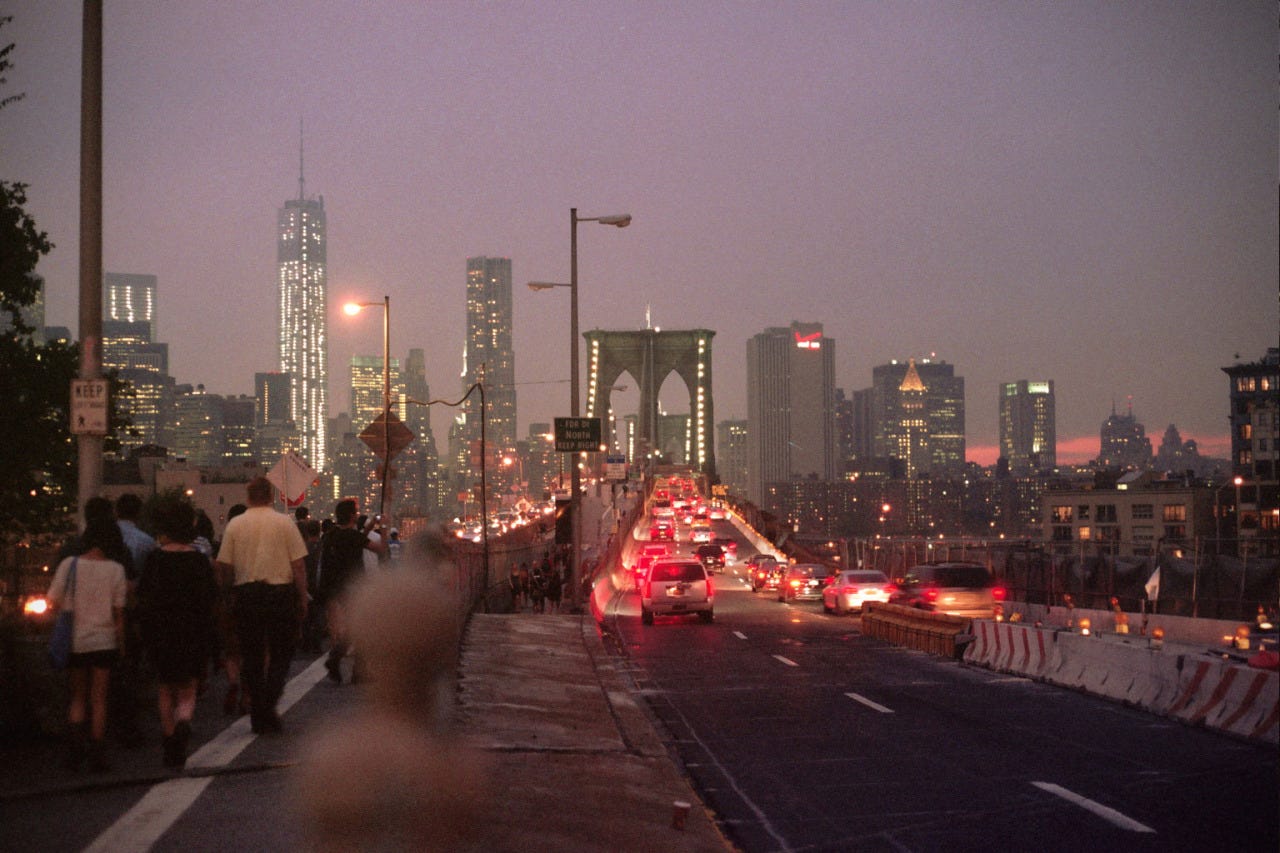
Akbar was interviewing the writer Ingrid Rojas Contreras when a small fix turned up by accident. She was walking while they spoke. Partway through, she stopped to report what her body was doing with the conversation—that as she walked and listened, she was also making spatial memory. Without a body to attach the voice to, she had given the exchange another kind of body: a path. Akbar named what that meant. The path would carry the mark of the conversation, and she’d be able to reach that mark again by walking there.
The places we return to, return parts of us.
That’s the practice: give a conversation a place on purpose.
You’re not walking for exercise with a call going, or fitting a conversation in between errands. Everyone with headphones walks and talks; the walk gets spent on whatever call arrives. Here you pick the route before the call begins, knowing which conversation it’s for. Then you go back alone.
How to do it
01 - Chose a conversation worth keeping
Not every call needs a place. Choose one that matters: the weekly call with a parent, the friend who moved away, the conversation you keep putting off because you know it will ask something of you.
Give a place to the words you might want back.
02 - Choose a route you can return to
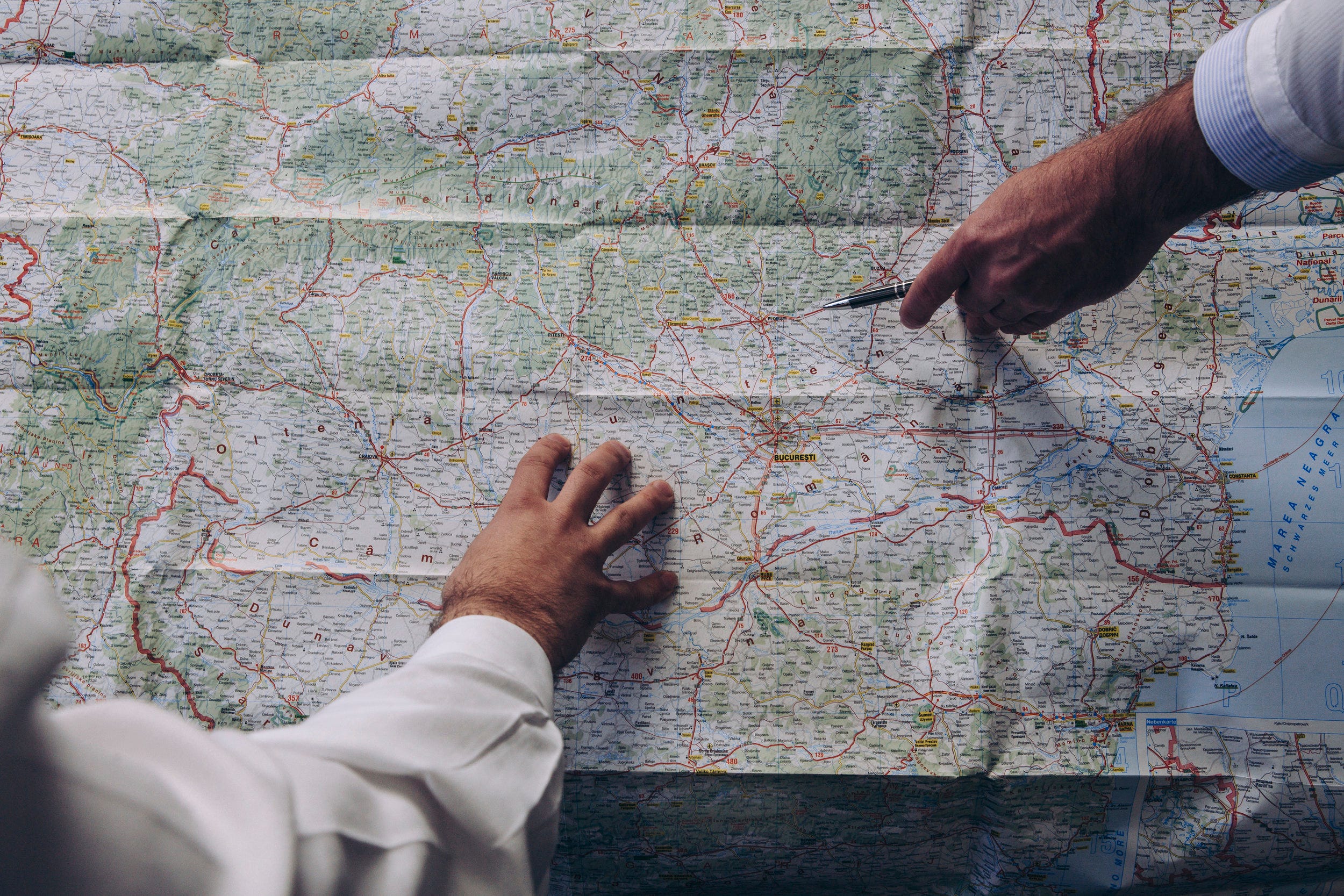
A loop through your neighborhood, a park trail, a familiar stretch of the BeltLine. The route needs enough character to register; a bridge, a cluster of trees, a row of storefronts. But it has to be easy to walk again.
03 - Let the conversation set the pace
Don’t build the walk around an errand or a destination, and don’t rush toward the end of it. Notice where you are when something important gets said: the tree you’re passing, the house on the corner, the slant of the light. Give the moment a patch of ground where it can take root.
04 - Return alone within the week
This is where the practice shows itself. You walk the same route in silence and see what comes back.
A bend in the road hands back a sentence. Halfway down some stairs, you remember a story they told you there the first time. The conversation hasn’t disappeared. Part of it is still out on the path, waiting.
Why it works
You’re borrowing one of memory’s oldest structures. Around 500 BC, in a story Cicero tells, the poet stepped out of a banquet hall a few minutes before the roof came down on everyone inside. The bodies were crushed past recognition. Simonides identified them anyway, by walking the room again in his mind and recalling who had been sitting where.
Roman orators built a technique out of that. To hold an hour of speech without notes, you pictured a building you knew well, put an image for each part of the argument in a particular room, and walked the building as you spoke. The technique is not well-known but its fossils are still in the language. When you say in the first place, and then in the second place, you’re counting off rooms. Topic comes from the Greek topos, a place. So does commonplace.
A conversation tied to a landscape sits differently in the mind. It has edges and coordinates. You can go back to it.
Keep it up for a year and the streets around you stop being neutral. A corner of the park holds a memory. The bench by the pond keeps another. The neighborhood turns into a document you read by walking.
Many of us already have one of these without having planned it. Think of a walk you take often, and ask whether a conversation is still living on it. If one is, maybe there’s someone you could call to place another beside it.
Give a conversation a street to happen on, then walk that street again some ordinary week. On an errand, or on nothing. Part of what was said will still be there, where you left it.